
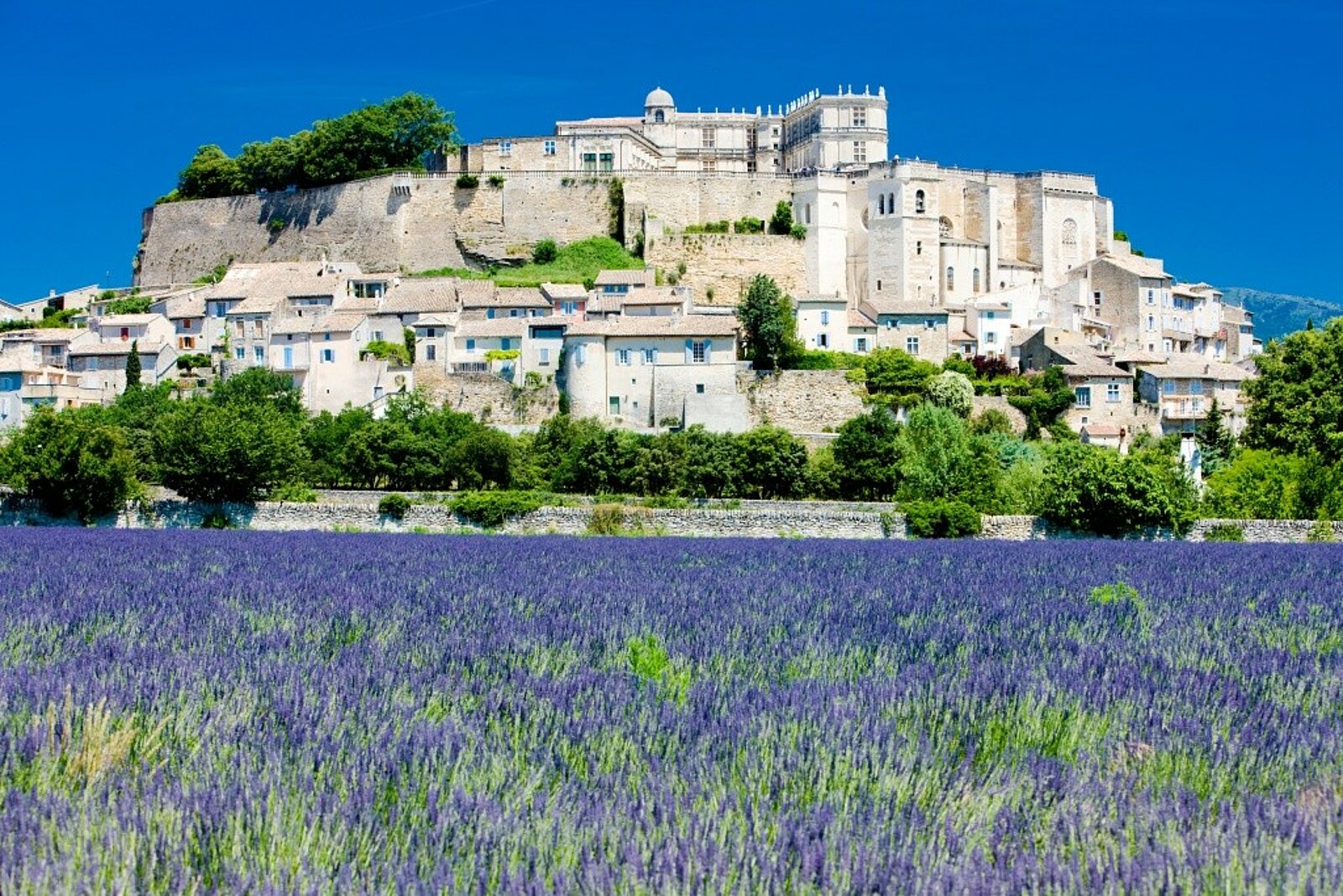
What to do in Drôme: Provençal villages, gorges and the Vercors
Key takeaways:
Drôme offers a variety of landscapes between Provence and the mountains : hilltop villages, lavender fields, olive groves, the Drôme Valley and the vast natural landscapes of the Vercors.
Must-see places in Drôme : Nyons and its olives, Buis-les-Baronnies, Grignan Castle, the Forest of Saoû and the Trois Becs peaks. Hiking, Provençal markets, river swimming and cultural visits offer plenty of ways to enjoy your holiday.
Drôme Provençale, ideal for a nature-filled holiday : Domaine de l'Écluse, a campsite in Bénivay-Ollon, is a great base for exploring the Baronnies Provençales, close to Buis-les-Baronnies and Vaison-la-Romaine.
The Drôme, between the Alps and Provence
Located in the Auvergne-Rhône-Alpes region, the Drôme stretches from the Rhône Valley to the foothills of the Alps.
To the north, the Drôme des Collines reveals its orchards and villages. In the centre, the Drôme Valley follows the course of the river, between vineyards and mountains. Further south, Drôme Provençale offers a first taste of the Mediterranean, with its olive groves, lavender fields and hilltop villages. To the east, the Vercors completes the picture with its forests, plateaus and limestone cliffs.
This diversity means you can tailor your holiday to your interests, combining heritage, gastronomy and outdoor activities.
To plan your stay, explore our campsites in Auvergne-Rhône-Alpes and our dedicated page on camping in the Drôme.
What to do in Drôme Provençale? Villages, lavender and the Baronnies
In the south of the department, Drôme Provençale invites you to explore its markets, quiet roads lined with olive trees and villages perched on hillsides.
From Nyons to Buis-les-Baronnies and Grignan, each stop reveals a different side of this region.
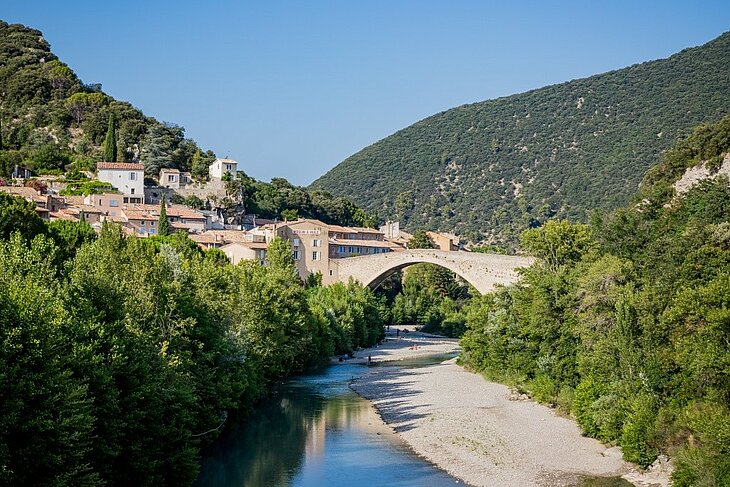
Nyons: discover the town of olives and its historic centre
Start your visit to Nyons at Place des Arcades, then wander through the narrow streets of the old town to the Romanesque bridge spanning the River Eygues. Take time to admire the façades, vaulted passageways and small squares along the way.
Nyons is also famous for its black olives and PDO olive oil, both produced from the Tanche variety. Visiting an olive mill or enjoying a tasting is a great way to learn more about this local speciality.
If you enjoy walking, follow the Sentier des Oliviers (Olive Tree Trail), an easy 3.9 km circular walk that takes around 1 hour 30 minutes. With information boards along the route, the trail winds through olive-growing landscapes and offers an insight into the history of olive cultivation.
On Thursday mornings, the Nyons market provides another opportunity to discover local produce. Seasonal fruit and vegetables, cheeses, olives and regional specialities fill the stalls.
Our tip: allow half a day to explore the historic centre and discover the town's olive oil heritage. Add the Olive Tree Trail if you would like to extend your visit with a walk.
To explore the surrounding area over several days, visit our campsites near Nyons.
Buis-les-Baronnies and Southern Drôme's Hilltop Villages
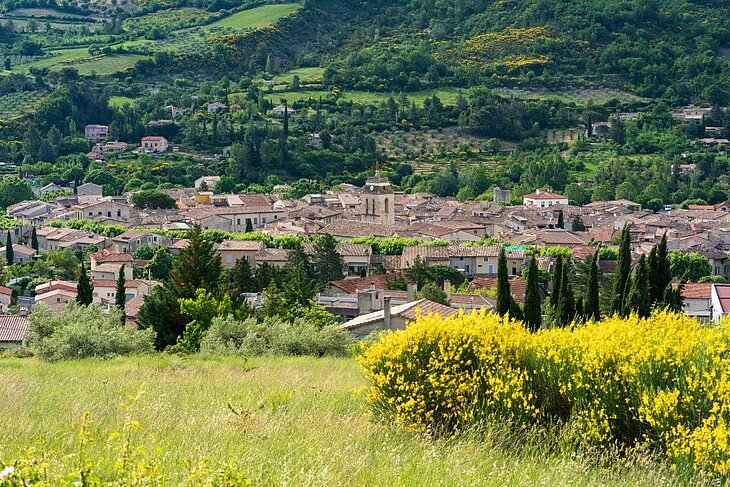
In Buis-les-Baronnies, start at the market square with its arcades, then wander through the narrow streets of the historic centre. With its old doorways, narrow passageways and colourful façades, the village is easy to explore on foot.
Buis-les-Baronnies is also known for its lime blossomproduction, which played a major role in the local economy for many years. Harvesting and trading lime blossoms shaped the history of the Provençal Baronnies, where the plant remains a symbol of the region today.
On Wednesday mornings, the market brings the village centre to life. It's a chance to meet local producers and sample regional specialities, including Picodon, a goat's cheese with Protected Designation of Origin (PDO) status.
Several villages around Buis-les-Baronnies are also worth a visit:
Montbrun-les-Bains, with its houses built into the mountainside, winding streets and panoramic views of the surrounding hills.
Mirabel-aux-Baronnies, surrounded by olive groves and vineyards, where you can explore the old streets and admire the remains of the village walls.
Venterol, with its stone houses, narrow passageways and vineyard-covered landscapes.
Le Poët-Laval, further west, a medieval village with cobbled streets and historic buildings.
For a day out, combine a visit to Buis-les-Baronnies with Montbrun-les-Bains. You'll have time to explore both villages and enjoy the scenery along the way without spending too much time driving.
To help plan your outings in the area, take a look at our article: What to do in Buis-les-Baronnies?
Grignan: Its Château and Madame de Sévigné's Story
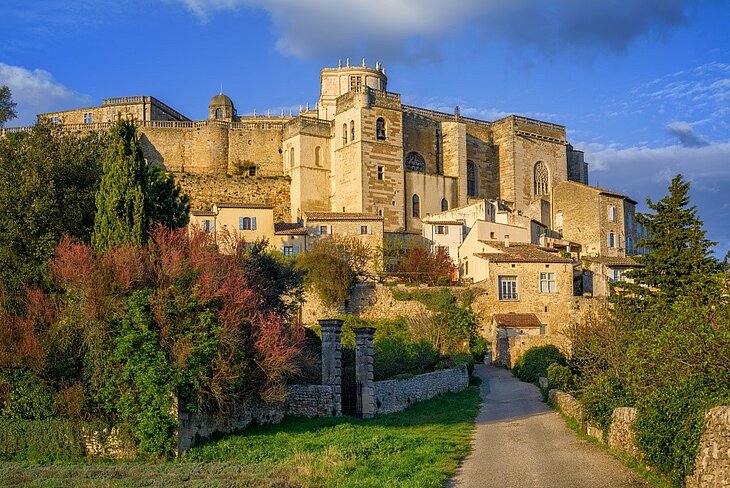
Overlooked by its château, Grignan offers a different side of Provençal Drôme.
Start with a stroll through the village's narrow streets before making your way up to the château. Originally a medieval fortress, it was transformed over the centuries into a grand residence, reflecting different periods of local history.
The château is closely associated with Madame de Sévigné, whose daughter, Françoise-Marguerite, married the Count of Grignan. The letters exchanged between the Marquise and her daughter helped make the château famous.
After your visit, take some time to admire the landscapes surrounding the village.
Allow half a day to explore Grignan and its château at your own pace.
If you'd like to extend your trip, head to the nearby Enclave des Papes. This area of Vaucluse, entirely surrounded by Drôme, comprises four communes, including Valréas and Richerenches.
The area is known for its vineyards and Tricastin black truffles, which you can find at specialist markets during the winter season. Wine lovers can also explore the Vinsobres and Grignan-les-Adhémar wine appellations during their stay.
Lavender, Hiking and Cycling: Enjoying the Landscapes of Provençal Drôme
Beyond its villages, Provençal Drôme offers plenty of opportunities for walking and outdoor activities surrounded by nature.
Where Can You See Lavender Fields in Drôme?
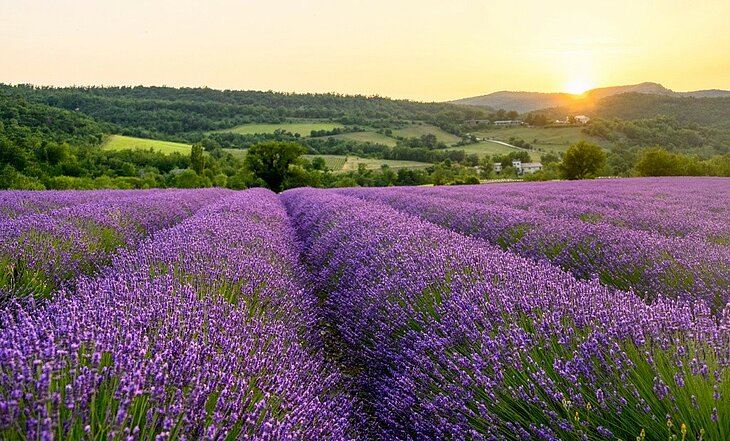
In summer, lavender and lavandin fields add colour to the landscape. You can spot them along quiet country roads in several parts of the region.
Around Grignan, the fields generally bloom between mid-June and mid-July. At higher altitudes in the Baronnies, particularly around Mévouillon and Ferrassières, flowering often starts a little later and can continue until late July or even early August.
The area around Dieulefit is also worth exploring.
However, flowering dates vary depending on the weather, altitude and harvest times. Before making a special trip to see the lavender in bloom, check with the local tourist information offices.
Please also respect the crops: lavender fields are working farmland and should only be admired from authorised paths.
Love olive groves, lavender fields and the villages of southern France? Find more holiday inspiration in our Campsites in Provence.
Hiking in the Baronnies Provençales Regional Natural Park
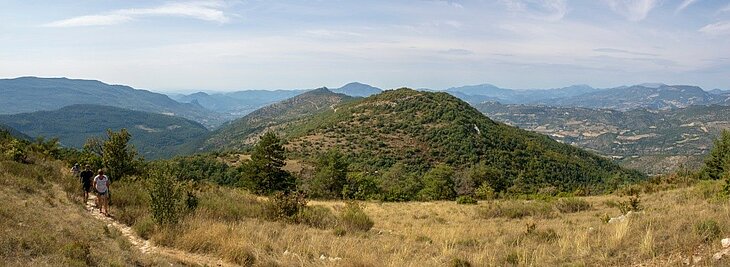
With its limestone mountains, gorges, forests and farmland valleys, the Baronnies Provençales Regional Natural Park offers plenty of opportunities for outdoor activities.
Walkers can choose gentle routes through olive groves and villages or tackle more challenging mountain trails. The area is also ideal for mountain biking, road cycling and rock climbing.
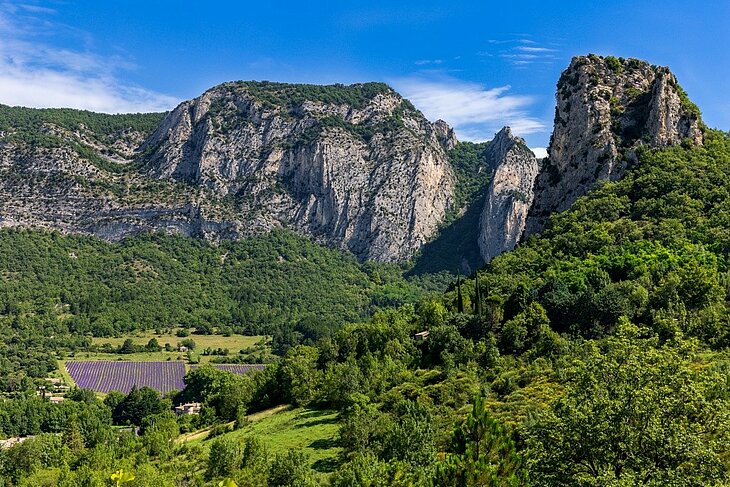
Near Buis-les-Baronnies, the Rocher Saint-Julien towers over the landscape and attracts hikers, climbers and via ferrata enthusiasts.
Cyclists can also explore the roads around Mont Ventoux in neighbouring Vaucluse. To extend your holiday in this part of the region, explore our ideas for campsites near Mont Ventoux.
In summer, set off early in the morning and check trail access conditions, particularly during periods of extreme heat.
Three Day Trip Ideas in Provençal Drôme
Spending a few days in southern Drôme? Here are three suggestions to help you explore the area without spending too much time travelling between places.
A day in Nyons and its olive groves: start in the historic centre and visit the market if you're there on a Thursday morning. Continue with an introduction to local olive oil production, then follow the Sentier des Oliviers (Olive Grove Trail) to enjoy the landscapes surrounding the town.
A day between Buis-les-Baronnies and Montbrun-les-Bains: spend the morning exploring the narrow streets and market of Buis-les-Baronnies. After lunch, head to Montbrun-les-Bains for a stroll through the village and panoramic views of the mountains.
A day between Grignan and the Enclave des Papes: visit Grignan Castle and explore the village streets before continuing to Valréas or Richerenches. Depending on the season, you can round off your day with a visit to the vineyards or a drive through lavender-filled landscapes.
These suggestions can be adapted to suit the weather, the season and the ages of your children.
What to See in the Drôme Valley, from Saoû to Die
As you head towards the centre of the department, the scenery begins to change. The River Drôme flows through a valley surrounded by mountains, villages and vineyards.
The area is popular for hiking, water activities and exploring charming small towns along the river.
Saoû Forest and the Trois Becs Peaks
Saoû Forest stands out for its unusual geography. It occupies a perched syncline, a vast geological formation surrounded by limestone cliffs, home to woodland landscapes and a rich variety of wildlife and plant species.
Several trails allow you to explore the area according to your fitness level.
For a more leisurely outing, choose the paths in the lower part of the forest. You can also visit the Auberge des Dauphins, now a visitor centre dedicated to the forest, to learn about its history and natural habitats.
Experienced hikers can consider climbing the Trois Becs peaks, the highest of which, Le Veyou, reaches 1,589 metres. This challenging hike requires good physical fitness and suitable equipment.
A family walk through the forest is very different from climbing the Trois Becs peaks, so make sure you choose a route suited to your abilities.
For a holiday filled with walking and outdoor adventures, take a look at our selection of campsites for hiking holidays.
Crest and Its Medieval Tower
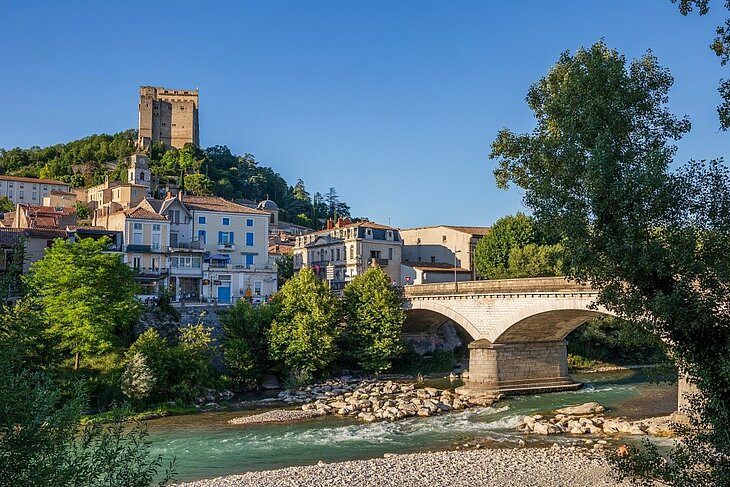
In Crest, the tall tower overlooking the town immediately catches the eye.
Standing 52 metres high, the Crest Tower is considered the tallest medieval keep in France. Once part of a medieval fortress, it also served as a prison for several centuries.
During your visit, you can learn about its history before enjoying panoramic views over the Drôme Valley.
Afterwards, continue your walk through the narrow streets of the historic centre and along the riverfront.
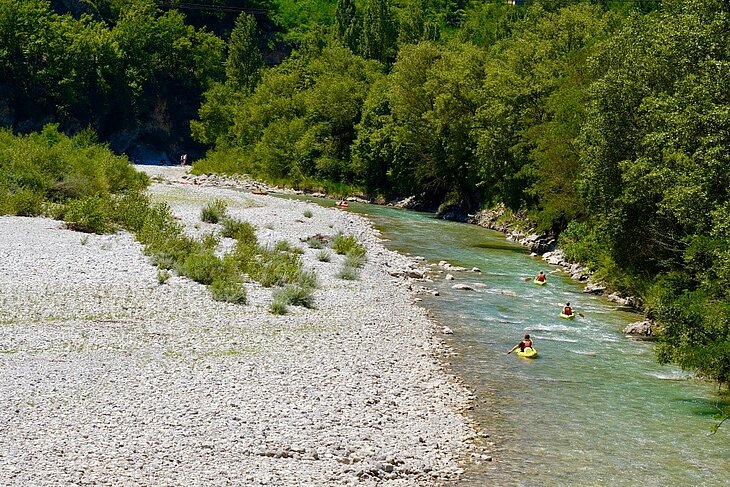
Saillans: Swimming and Canoeing on the River Drôme
Further east, Saillans is a great starting point for outdoor activities in the valley.
In summer, the River Drôme attracts canoeing and swimming enthusiasts. Several canoeing routes let you explore the scenery from the water, depending on river levels and weather conditions.
The riverbanks also offer places to relax and enjoy a picnic.
Please note that swimming is not permitted everywhere, and conditions may change depending on water quality, currents or local regulations. Before settling down by the river, check which areas are accessible and whether any restrictions apply.
If you enjoy spending your holidays near the water, explore our ideas for campsites by a river or lake.
Die: Heritage, Mountains and Clairette de Die
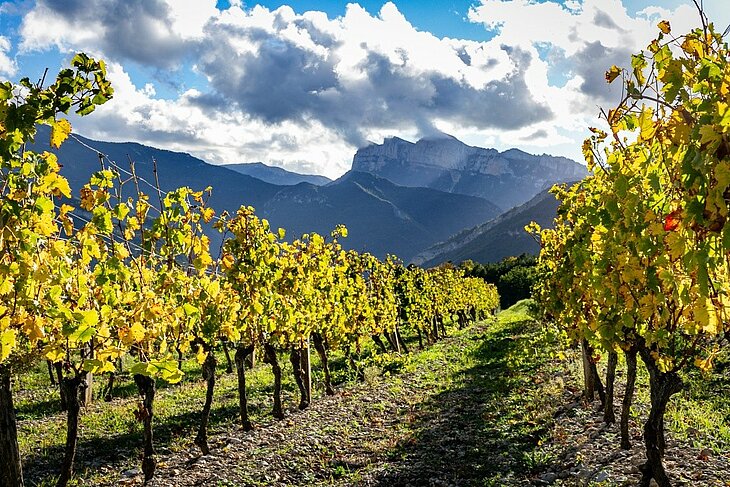
At the gateway to the Vercors, Die offers a different side of Drôme, with its vineyards and mountain scenery.
Wander through the historic streets, explore the local heritage, then head into the surrounding countryside for a walk.
The area is also known for Clairette de Die PDO, a sparkling wine produced in the Diois region.
A visit to the vineyards or a wine tasting for adults is a great way to learn about how this local wine is made and its history.
The Drôme Vercors: Gorges and Vast Plateaux
In the east of the department, the Vercors offers a more mountainous landscape.
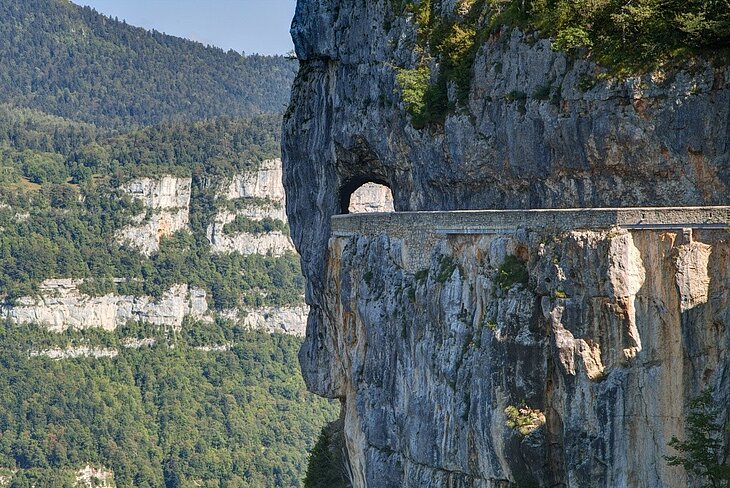
In the Drôme section, the Vercors Regional Natural Park is characterised by forests, limestone cliffs and vast plateaux.
The Combe Laval road, carved into the rock high above the Royans area, offers spectacular scenery, with several viewpoints overlooking the cliffs and natural cirque.
Higher up, the Font d'Urle plateau offers sweeping mountain views and plenty of hiking opportunities.
The villages of the Royans area are also lovely places to stop and explore the local heritage.
In summer, the Vercors attracts walkers looking to enjoy mountain scenery and temperatures that are often cooler than in the lowlands. Before setting off, check the weather forecast and road conditions, particularly on mountain routes.
What Else Is There to Visit in Drôme?
Beyond its Provençal villages and natural landscapes, Drôme has several towns and attractions worth exploring during your stay.
Northern Drôme: Valence and Hauterives
Valence: Heritage and Gardens
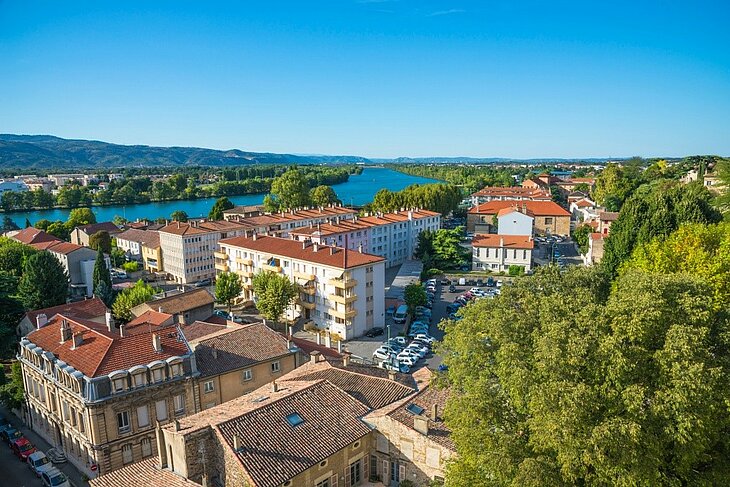
On the banks of the Rhône, Valence offers a different side of the department.
Stroll through the historic centre to admire the Maison des Têtes and its sculpted façade, then head to Saint-Apollinaire Cathedral.
Jouvet Park, with its tree-lined paths, is a lovely place to relax in the shade.
The town is also a good starting point for exploring northern Drôme. Find more holiday ideas on our campsites near Valence page.
The Palais Idéal du Facteur Cheval in Hauterives
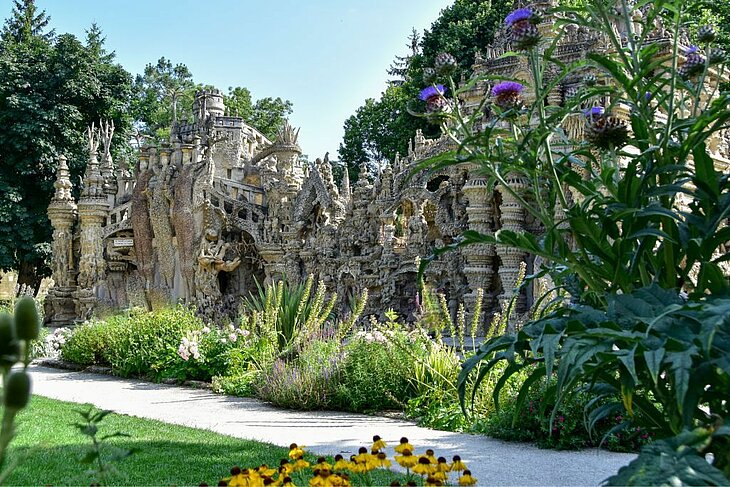
In the rolling hills of northern Drôme, the Palais Idéal du Facteur Cheval is a remarkable monument, known for its unusual sculptures, architecture and history.
Ferdinand Cheval, a rural postman, spent 33 years building this extraordinary structure using stones he collected along his postal rounds.
Children will enjoy spotting the animals, figures and imaginary shapes decorating its façades.
Allow around an hour to an hour and a half to explore the site at a leisurely pace.
Further South: Montélimar and Pierrelatte
Montélimar, the Town of Nougat
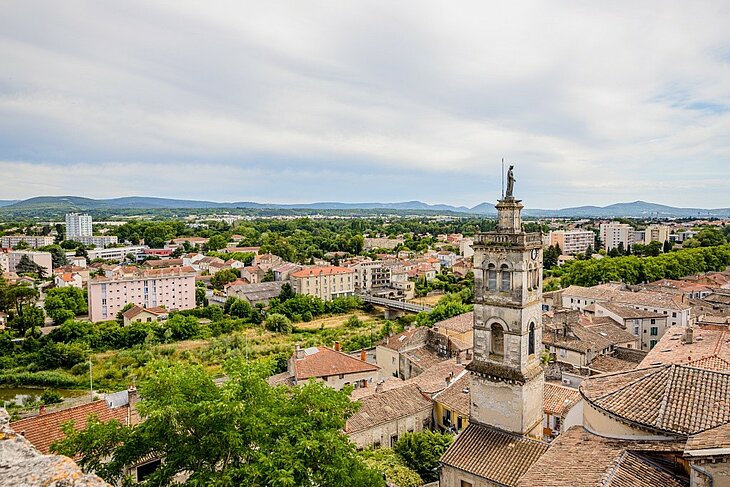
In Montélimar, nougat is an important part of the town's culinary heritage.
During your visit, learn how this traditional sweet is made, sample some local specialities and explore the town centre.
You can also visit the Château des Adhémar, which overlooks the town and offers a glimpse into its medieval history.
La Ferme aux Crocodiles in Pierrelatte
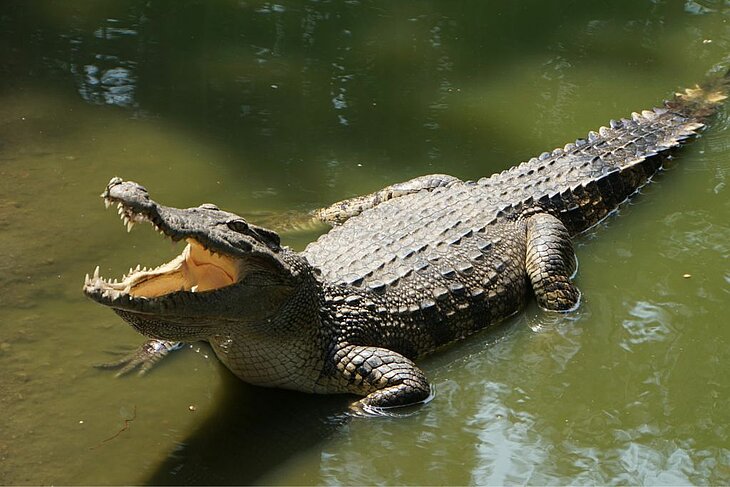
In the south of the department, La Ferme aux Crocodiles is home to several species of crocodiles, turtles and reptiles in a recreated tropical environment.
Viewing areas and educational displays help children learn about these animals and their natural behaviours.
Allow around 2½ to 3 hours to explore the attraction at your own pace.
These two family-friendly attractions, in Hauterives and Pierrelatte, are great additions to a holiday with children. For a holiday combining sightseeing, playtime and relaxation, explore our ideas for family camping holidays.
Our Tips for Planning Your Holiday in Drôme
When Is the Best Time to Visit Drôme?
Spring and early autumn are ideal for exploring villages and hiking, with temperatures generally milder than in the height of summer.
Summer is perfect for enjoying local markets, water activities and lavender-filled landscapes. However, in the south of the department, high temperatures can make outdoor activities less comfortable during the middle of the day.
How Many Days Do You Need to Explore Drôme?
A long weekend gives you time to explore one part of the department, such as Nyons and the Baronnies Provençales.
With five to seven days, you can combine village visits, hiking, local markets and relaxing days.
If you also want to explore the Drôme Valley, the Vercors and the north of the department, allow more time. Distances and winding mountain roads mean that travelling between attractions can take longer than expected.
Where Can You Go Swimming in Drôme?
The River Drôme offers several places to swim, particularly along the valley, subject to local regulations.
In the south of the department, Lac du Pas des Ondes, in Cornillon-sur-l'Oule, is another option, with a designated swimming area during the summer season.
Before swimming, check access conditions, any restrictions and whether lifeguards are on duty.
What Can You Do in Drôme with Children?
The Palais Idéal du Facteur Cheval and La Ferme aux Crocodiles are two family-friendly attractions worth visiting.
With younger children, choose shorter walks, local markets, easily accessible villages and activities that allow plenty of breaks.
During hot weather, plan sightseeing for the morning and enjoy quieter activities in the afternoon.
Where to Stay in Provençal Drôme?
Southern Drôme is a convenient base for exploring the Baronnies Provençales at your own pace.
From here, you can visit Nyons, Buis-les-Baronnies and the surrounding villages, while enjoying quieter days at your campsite.
Domaine de l'Écluse: A Family Campsite in the Baronnies Provençales
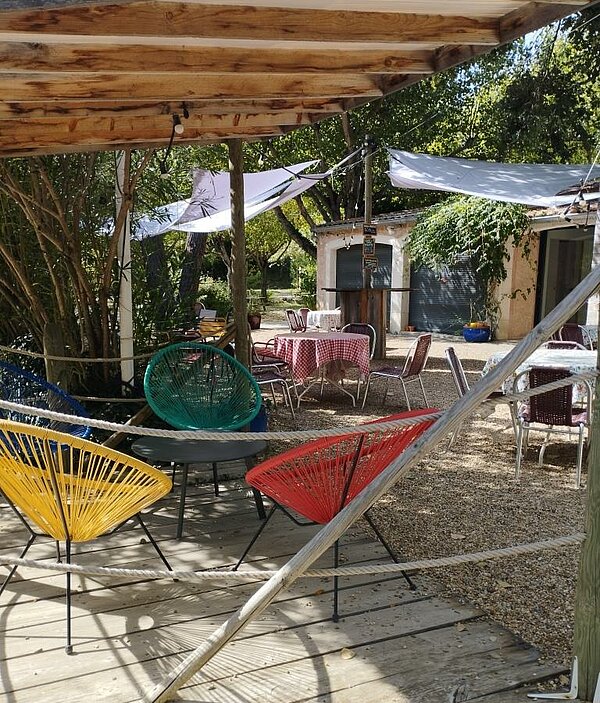
In Bénivay-Ollon, Domaine de l'Écluse welcomes holidaymakers to a peaceful natural setting beside a small river and close to a family-owned olive grove.
Pauline and Martial, the owners, share their passion for the local area and their family farm, located right next to the campsite.
The farm grows olives and einkorn wheat, among other crops. Young pistachio trees have also been planted on the estate.
In July and August, guided farm visits are available on selected dates, offering an insight into local farming.
For children, the campsite has a swimming pool, play areas and a zip line. Den-building workshops are also organised, giving younger guests plenty to enjoy between excursions.
For accommodation, choose from a tree-shaded pitch, an air-conditioned chalet or an air-conditioned mobile home. If you prefer self-catering accommodation, explore the different options in our Mobile Home Holidays section.
Domaine de l'Écluse is located 10 km from Buis-les-Baronnies and 16 km from Vaison-la-Romaine. Its location makes it easy to explore the villages, markets and hiking trails of the Baronnies Provençales.
In neighbouring Vaucluse, Vaison-la-Romaine is well worth a day trip to explore its Roman ruins, Roman bridge and the narrow streets of its medieval town.
To plan your visit, read our article What to Do in Vaison-la-Romaine?
Campsite Near Vaison-la-Romaine
Camping de l'Écluse
In Provençal Drôme, between Buis-les-Baronnies and Vaison-la-Romaine, near an olive grove.
For those looking for a campsite surrounded by nature, where they can combine sightseeing, outdoor activities and relaxation, Domaine de l'Écluse offers an ideal setting for a holiday in Provençal Drôme.
Extend Your Trip to Ardèche or Haute-Provence
Fancy exploring more landscapes after your stay in Drôme? Continue your journey into Ardèche with Le Petit Bois Campsite in Ruoms, just a 600-metre walk from the River Ardèche and close to Vallon-Pont-d'Arc.
Alternatively, head to Alpes-de-Haute-Provence and Les Prés Hauts Campsite in Sisteron to explore its citadel and the landscapes of the Durance Valley.
Why Not Take Your Time Exploring Provençal Drôme?
There's no need to try to see everything in just a few days. Between the villages of the Baronnies Provençales, the markets of Nyons, Grignan Castle and the many hiking trails, southern Drôme offers plenty to fill your days while leaving time to relax.
In Bénivay-Ollon, Domaine de l'Écluse is a convenient base for exploring this part of the department and returning to the peace of the countryside after your excursions.
And to enjoy more holidays in the great outdoors, explore all our Sites et Paysages nature campsites.


