
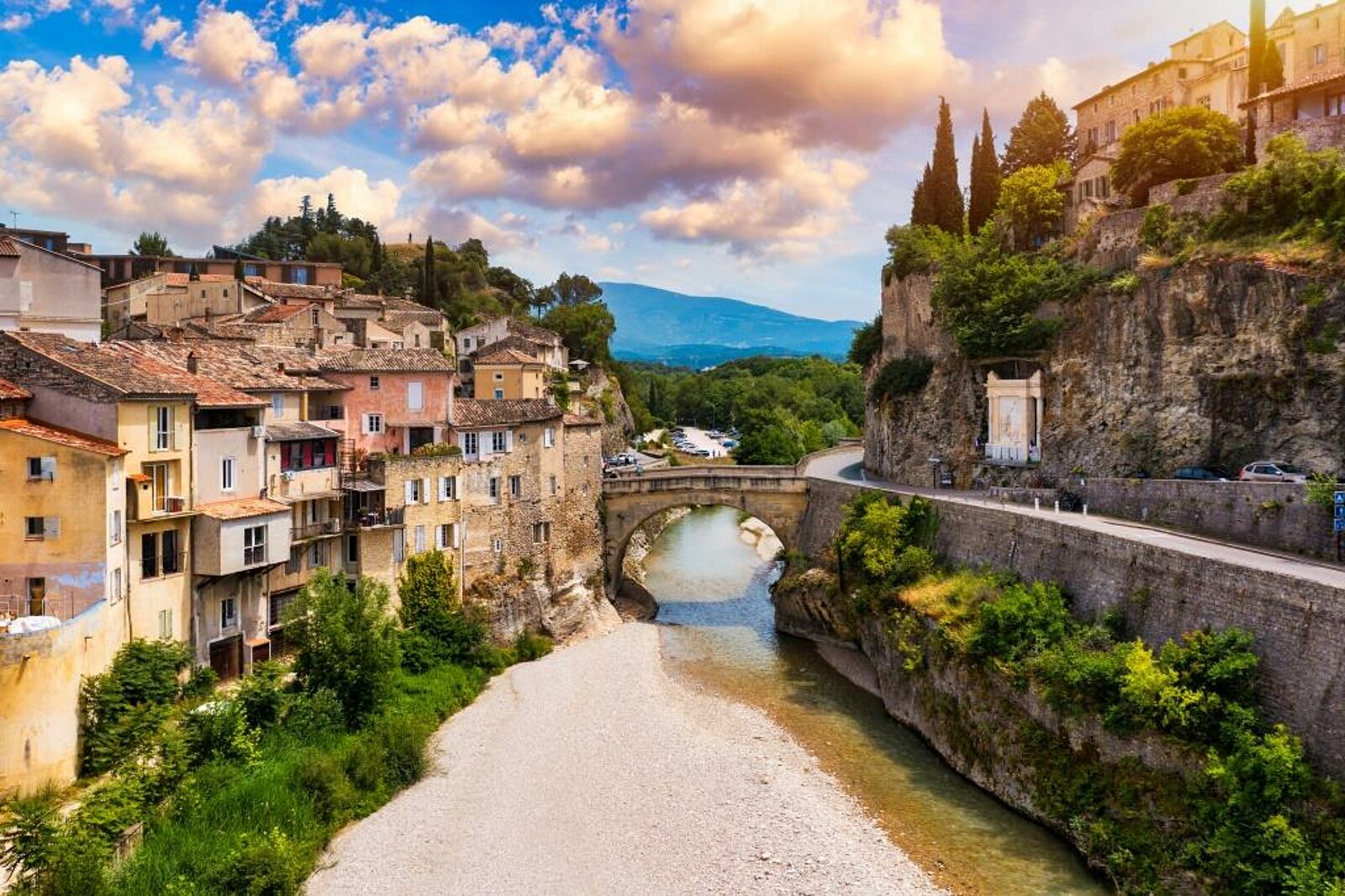
What to Do in Vaison-la-Romaine: Roman Ruins, Medieval Town and Mont Ventoux
Key things to know for your stay in Vaison-la-Romaine
Heritage : The ancient sites of Puymin and La Villasse, the Roman theatre, the Roman bridge and the Upper Town offer a fascinating insight into Vaison-la-Romaine's history through the ages.
Local life : The large Provençal market brings the town centre to life every Tuesday morning, while the Roman theatre hosts performances and festivals throughout the summer.
Where to stay : Just 16 km from Vaison-la-Romaine, Domaine de l’Écluse campsite in Bénivay-Ollon offers a peaceful retreat in the Drôme Provençale, with easy access to the surrounding region.
The Ancient Roman Sites of Vaison-la-Romaine
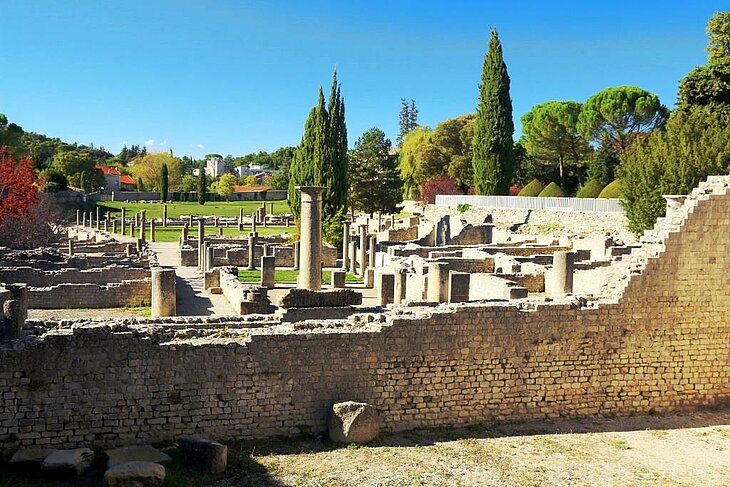
To understand why the town is called Vaison-la-Romaine, start with the ancient Roman sites of Puymin and La Villasse.
At Puymin, you can explore the remains of grand Roman houses and several public spaces. The rooms, courtyards, baths and decorative features offer a fascinating insight into the layout and daily life of ancient Vasio.
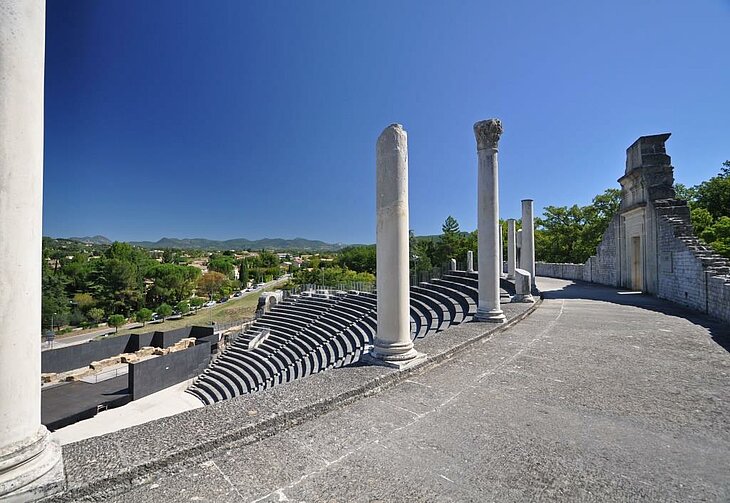
This is also where you'll find the Roman theatre, built in the 1st centuryAD and still used today for performances and cultural events.
Nearby, the Théo Desplans Archaeological Museum houses statues, household objects, coins and artefacts uncovered during excavations. A visit here helps you better understand the remains you've explored.
Just a few minutes' walk away, the La Villasse site offers another glimpse into Roman life. Here, you can follow an ancient paved street lined with shops and explore the remains of large private houses.
The Pass ticket gives you access to the Puymin and La Villasse sites, the archaeological museum and the Roman theatre for 24 hours.
We recommend allowing a full day to explore the main attractions at a relaxed pace. Spend the morning visiting the Roman ruins of Puymin and La Villasse, the theatre and museum, before heading to the Roman bridge and Upper Town in the afternoon.
Notre-Dame-de-Nazareth Cathedral and Saint-Quenin Chapel
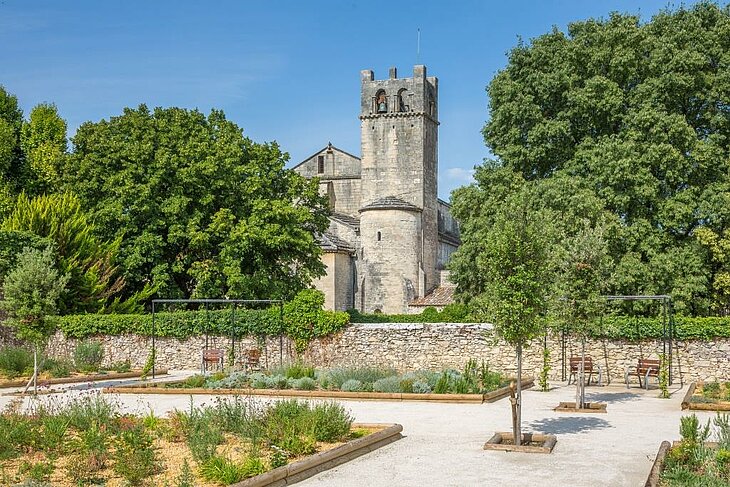
After exploring the ancient sites, head towards Notre-Dame-de-Nazareth Cathedral, near La Villasse.
Built in the 11th century on the site of earlier Christian buildings and altered the following century, the cathedral also features a Romanesque cloister. Together, they offer a fascinating transition from Antiquity to the Middle Ages before you reach the medieval town.
A little further on, Saint-Quenin Chapel is also worth visiting for its Romanesque architecture and triangular apse.
However, the interior is not open to the public without prior arrangement. Visits can be organised on request through the Heritage Department or during certain events. At other times, you can admire the chapel from outside before continuing your exploration of the town.
The Roman Bridge: Lower and Upper Town
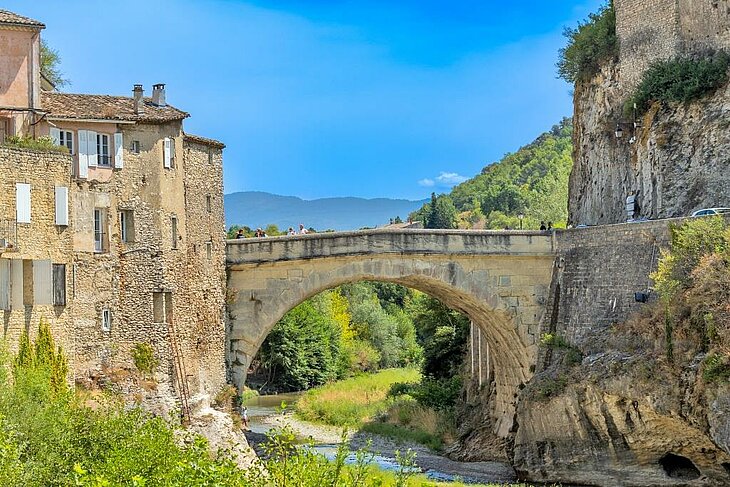
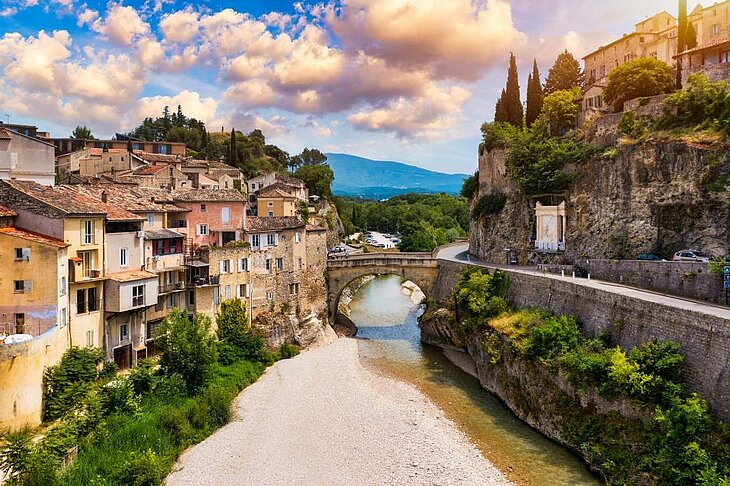
Next, head to the banks of the Ouvèze River and the Roman bridge in Vaison-la-Romaine.
Built in the 1st century AD, it still spans the river today, connecting the lower town with the medieval town. Its single arch rests directly on the natural rock.
Take a few minutes to admire the bridge from the riverbanks. From here, you can appreciate its position above the Ouvèze and the contrast between the different parts of the town.
Once you cross the bridge, the surroundings gradually change. The streets become narrower and begin to climb towards the Upper Town.
Explore Medieval Vaison-la-Romaine
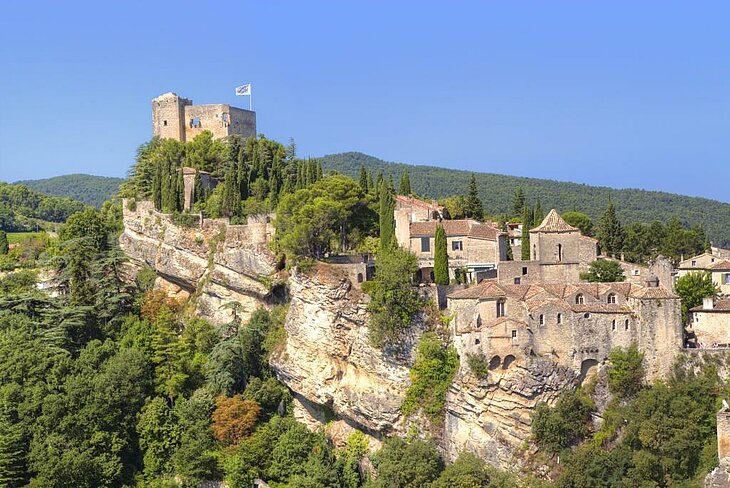
Explore the Upper Town on foot, wandering through cobbled streets, narrow passageways, past historic houses, fountains and small squares.
This part of Vaison-la-Romaine developed on higher ground during the Middle Ages, particularly amid rivalry between the Bishops of Vaison and the Counts of Toulouse.
As you make your way uphill, take time to venture slightly off the main route. Here, the charm lies as much in the monuments as in the winding streets and scenic viewpoints.
Continue towards the Count's Castle, built on a rocky outcrop overlooking the town. Although the interior is not open to visitors, the climb rewards you with panoramic views of Vaison-la-Romaine, the Ouvèze Valley and the surrounding hills.
Then make your way leisurely back down towards the old market square and the Roman bridge.
Enjoy Vaison-la-Romaine's Provençal Market
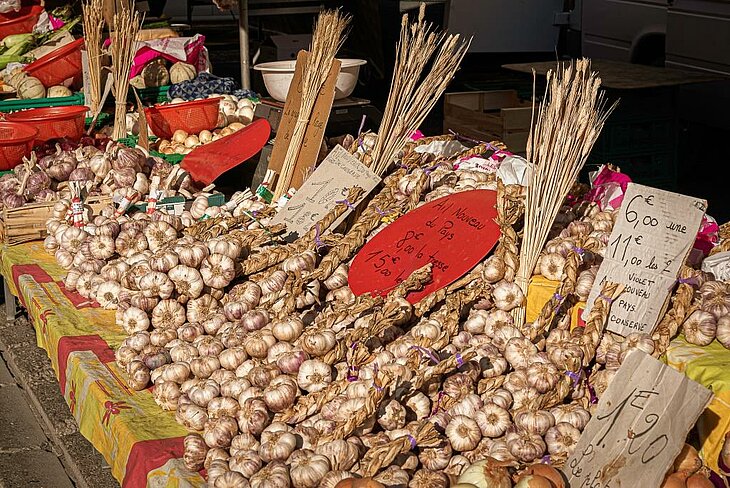
If your stay includes a Tuesday, don't miss the large Provençal market in Vaison-la-Romaine.
Every Tuesday morning, stalls fill much of the town centre's streets and squares. You'll find fruit, vegetables, regional specialities, fresh food, crafts, clothing and everyday essentials.
The market has been part of the town's history for centuries. Records date back to the late 15th century, with Tuesday becoming the established market day in the 16th century.
In summer, several hundred stallholders can fill the town centre.
A smaller market dedicated to local producers also takes place on Saturday mornings.
If you're visiting Vaison-la-Romaine on a Tuesday, we recommend starting your day at the market before exploring the ancient sites. This way, you can enjoy the lively morning atmosphere and leave the rest of the day free for sightseeing.
Vaison Danses: The Ancient Theatre Lives On
The ancient theatre is more than just an archaeological site.
Every summer, it comes alive again as a performance venue, hosting various cultural events, including the Vaison Danses festival.
Dance companies and choreographers perform at several venues across Vaison-la-Romaine, including performances held in the ancient theatre.
If you're staying in the region in July, we recommend checking the programme before your trip. Watching a performance after exploring the theatre during the day offers a fresh perspective on its scale and atmosphere.
One Day in Vaison-la-Romaine: What to Do ?
If you only have one day, we recommend planning your visits by location rather than trying to see everything.
On Tuesdays, start with the Provençal market in the town centre.
Then head to the ancient sites of Puymin and La Villasse, the ancient theatre and the archaeological museum. Allow a good part of the morning or early afternoon, depending on your pace.
Continue towards Notre-Dame-de-Nazareth Cathedral, then stop by Saint-Quenin Chapel. As the interior is only accessible during scheduled visits or by arrangement, there's no need to allow time for a full visit.
Head back towards the town centre and cross the Roman bridge to reach the Upper Town.
Finish your day by wandering through its narrow streets towards the Count's Castle, before making your way leisurely back down to the Ouvèze River.
This route takes you from Antiquity to medieval religious heritage and the hilltop town, without unnecessary backtracking.
What to See Around Vaison-la-Romaine ?
After spending a day exploring the town, you can enjoy several excursions through the landscapes surrounding Vaison-la-Romaine.
Mont Ventoux, the Dentelles de Montmirail and Drôme Provençale offer varied scenery without the need for long journeys.
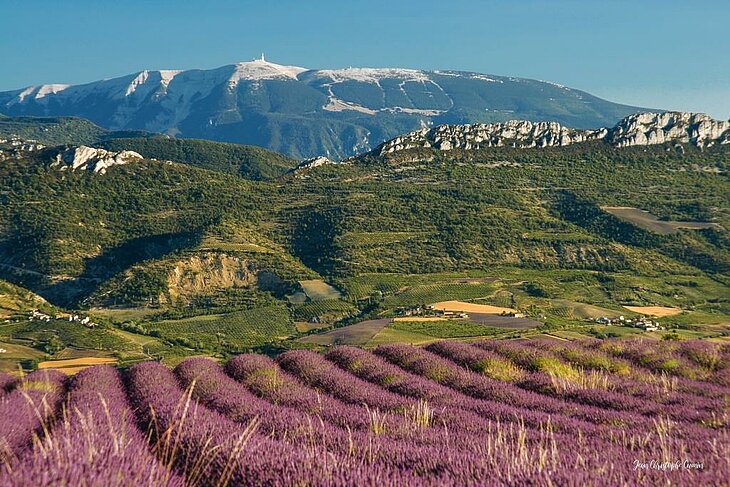
Mont Ventoux
From Vaison-la-Romaine, you can reach Mont Ventoux via Malaucène.
The Mont Serein resort is around a 30-minute drive away. Depending on the season, you can enjoy a hike, admire the scenery or continue towards the summit when the road is open.
Before setting off, always check the weather conditions and road access. The road to the summit closes for part of the winter.
If you enjoy planning your holidays around walking trails, explore our ideas for a campsite stay near Mont Ventoux or a hiking holiday at one of our campsites.
The Dentelles de Montmirail
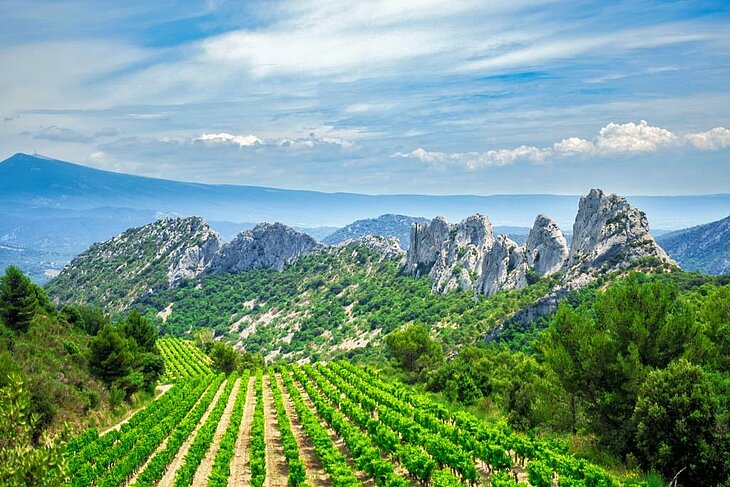
West of Mont Ventoux, the Dentelles de Montmirail offer a completely different landscape.
Limestone cliffs, vineyards and villages line the roads and trails through the hills. The area is ideal for hiking, cycling and rock climbing.
You can visit Séguret, Sablet or Gigondas and spend half a day or a full day exploring, depending on your chosen route.
Nyons
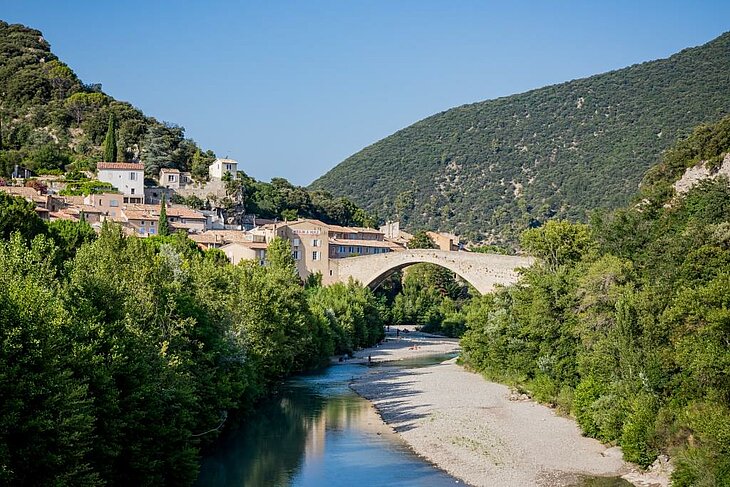
Heading north towards Drôme Provençale, Nyons is another lovely destination for a day trip.
Its historic centre, Place des Arcades and surrounding olive groves offer a different perspective on Provence.
Waymarked walking trails take you through the olive groves around the town.
Explore our ideas for a campsite stay near Nyons.
Buis-les-Baronnies
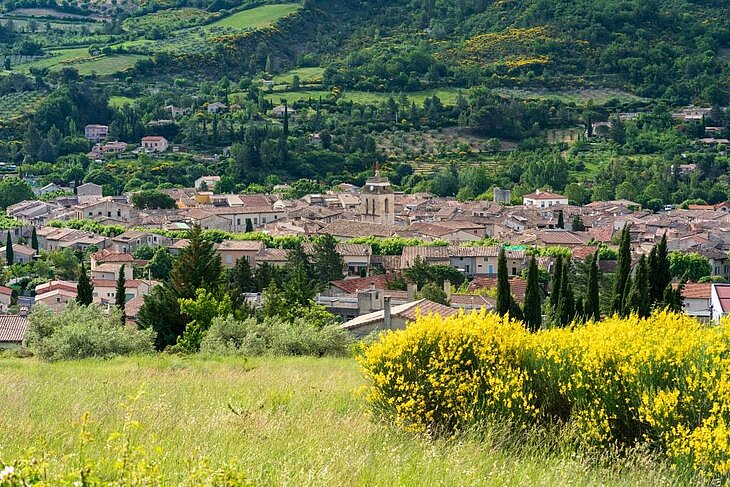
East of Vaison-la-Romaine, Buis-les-Baronnies is the gateway to the Baronnies Provençales.
The area is particularly popular with hiking, cycling and outdoor activity enthusiasts. Rocher Saint-Julien is especially well known for its via ferrata routes.
If you'd like to spend a day exploring the village and its surrounding landscapes, take a look at our article What to Do in Buis-les-Baronnies.
Where to Stay Near Vaison-la-Romaine ? Domaine de l’Écluse Campsite in Bénivay-Ollon
To explore Vaison-la-Romaine while staying somewhere peaceful, Domaine de l’Écluse Campsite is just 16 km from the town centre.
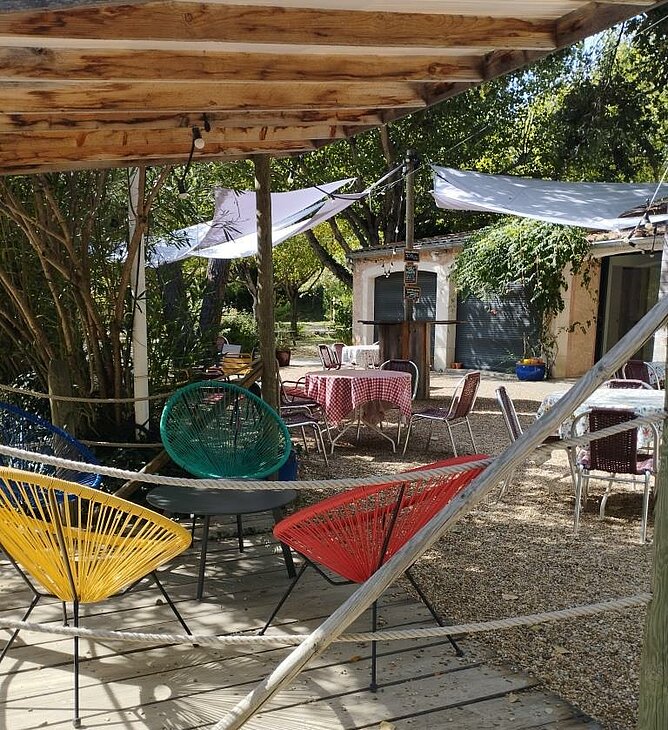
Located in Drôme Provençale, the campsite sits within a working farm surrounded by olive trees.
Its peaceful setting lets you reconnect with nature after a day of sightseeing, while remaining close to the region's main attractions.
The campsite is also an ideal base for exploring Vaison-la-Romaine, Nyons, Buis-les-Baronnies and Mont Ventoux without changing accommodation during your stay.
Depending on your preferences, you can stay in a chalet, mobile home or on a camping pitch.
It's a great choice if you're looking for a campsite in the Drôme, a countryside campsite or a nature-focused holiday combining sightseeing, hiking and relaxation.
Exploring Vaison-la-Romaine and the Baronnies Provençales
With its ancient sites, Roman bridge, Upper Town and Provençal market, Vaison-la-Romaine deserves a full day of exploration.
But staying for a few days gives you more time to explore the surrounding area. Spend one day in town, another at Mont Ventoux or the Dentelles de Montmirail, then head to Nyons or Buis-les-Baronnies.
There's no need to fill every day with activities.
Leave time to wander around a market, stop in a village, walk among olive trees or simply enjoy the scenery.
From Domaine de l’Écluse in Bénivay-Ollon, you're ideally placed between Vaison-la-Romaine and the Baronnies Provençales. It's the perfect base for combining cultural visits, outdoor activities and peaceful moments in nature.


